Immigration · · 6 min read
Right to work checks now reach agency, casual and gig workers: what changed on 1 October 2026
From 1 October 2026 the right to work regime extends beyond employees to agency, subcontracted, casual and platform workers. What that means for who you check and what you keep.

For years the right to work check had a clear edge: you checked your employees. People who worked for you through an agency, as a subcontractor or through an app sat outside the civil penalty regime. On 1 October 2026 that edge moved.
This is a summary for employers. It is not immigration advice. The source to read is the Home Office employer’s guide to right to work checks, reissued on 1 October 2026.
What changed
Section 48 of the Border Security, Asylum and Immigration Act 2025 was brought into force on 1 October 2026 by commencement regulations made in June. It extends the illegal working regime beyond people employed under a contract of employment to people who work for a business in other ways, including:
- agency workers
- subcontracted workers
- casual workers
- gig and platform workers
The penalty has not changed, and it did not need to. A civil penalty for employing an illegal worker can be up to £60,000 per worker. A correctly carried out check gives you a statutory excuse against that penalty. Without the check, you do not have one.
Who this reaches
If your workforce is only salaried employees, little changes. The employers who need to act are the ones whose week depends on people who are not on the payroll:
- Care providers using bank and agency staff
- Restaurants, takeaways and hotels with casual and delivery workers
- Security and cleaning firms that subcontract shifts
- Construction firms with labour-only subcontractors
- Anyone using self-employed couriers or platform workers
What to do now
1. List everyone who works for you who is not an employee
Most businesses cannot produce this list on the day. Start with last month’s invoices from agencies and subcontractors, and the rota.
2. Decide who carries out the check, and get it in writing
Where an agency supplies the worker, your contract should say who checks and how you will see the evidence. Read the guide on which party holds the statutory excuse in each arrangement, and take advice if your supply chain is layered.
3. Check before the first shift
A check carried out after someone has started does not give you the excuse for the days before it. For most non-British and non-Irish workers this means a share code and the Home Office online service. Expired biometric residence permits are not acceptable evidence.
4. Keep the evidence, with the date
For each person: what was checked, how, by whom, on what date, and the date any follow-up check is due.
5. Diary the follow-up
Time-limited permission needs a follow-up check before it expires. This is the step that is missed most often, because it falls months after anyone was thinking about it.
Where an agent helps
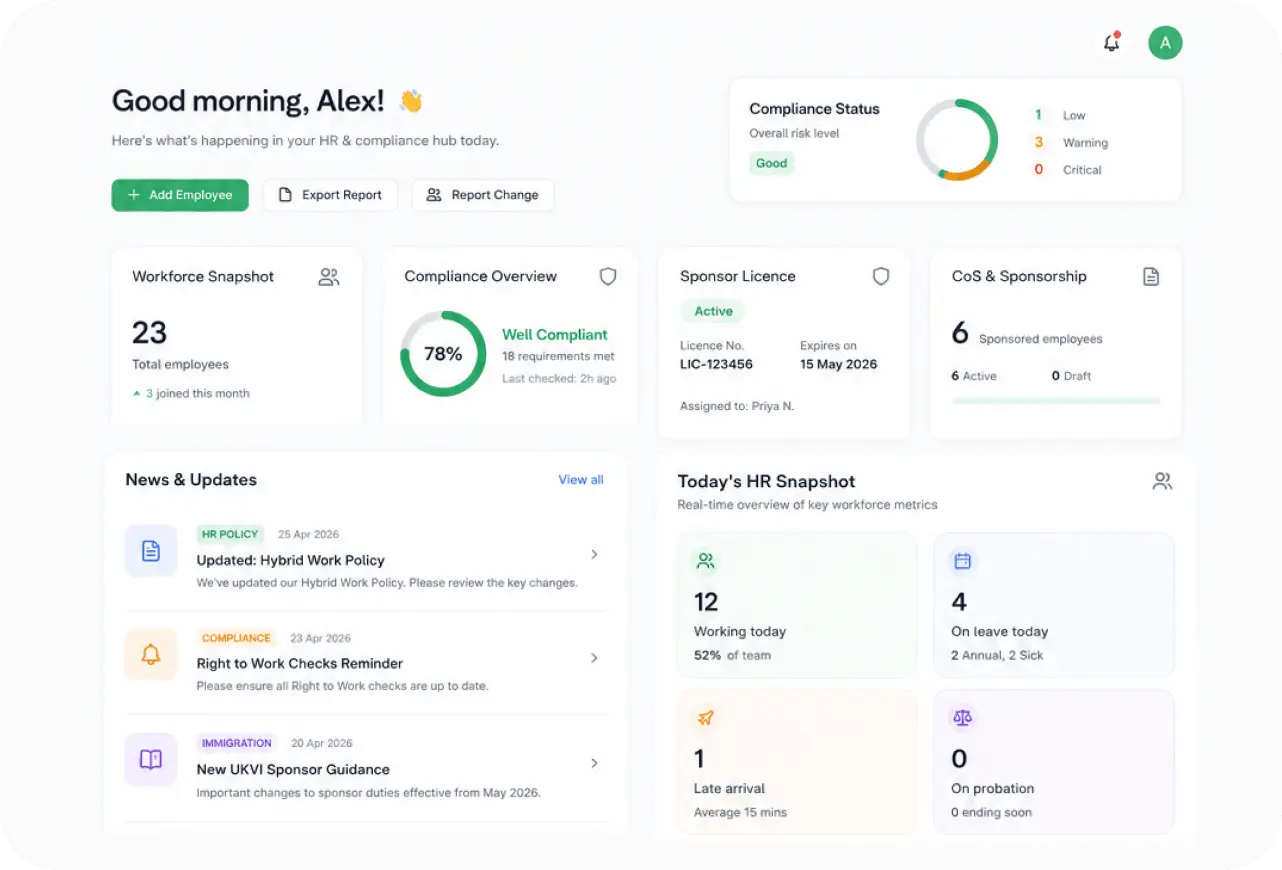
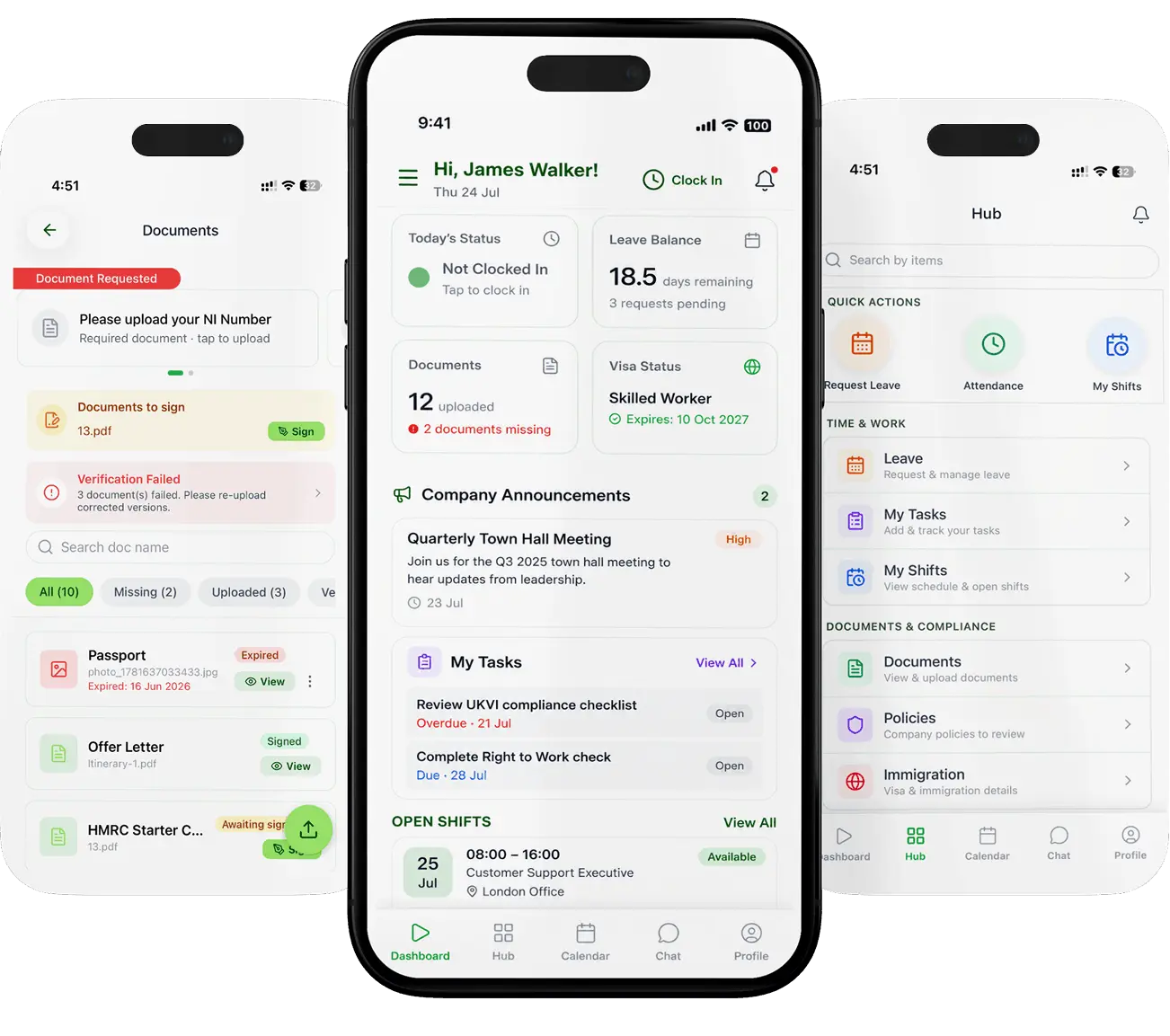
The rule is simple. Keeping to it across a changing workforce is the hard part: new names every week, evidence held by someone else, dates months apart. The immigration agent in roothr.ai keeps one list of everyone who works for you with the check, the evidence and the follow-up date for each, and tells you every morning who is on the rota without one. The recruitment agent asks the right to work question before the interview, not after the offer.
What neither will do is decide that someone has the right to work without a check on file, or advise a worker on their immigration position. That is for the check, and for a regulated adviser.
Hire the agent for this
- Immigration agentHire
Watches right to work dates, sponsored workers and reporting windows, and drafts what UKVI needs.
- Recruitment agentHire
Screens applicants against the role, books interviews and drafts the offer, with right to work checked first.
Run your own month on roothr.ai
HR, payroll, UKVI compliance and hiring in one application. Plans from £39.99 a month.