Compliance · · 7 min read
Employment Rights Act: what changes on 30 October 2026, and what your records should show
The tribunal time limit is now six months, the harassment duty tightens on 30 October 2026 and the unfair dismissal qualifying period falls to six months in January 2027. What each change asks of your HR records.
The Employment Rights Act 2025 does not arrive on one day. It arrives in stages, and three of them land within a few months of each other this autumn and winter. This is a summary for employers of what is in force, what is about to be, and what each change means for the records you keep. It is based on the government’s implementation timeline as updated on 25 September 2026. It is not legal advice, and dates have moved before, so check the timeline before you rely on one.
Already in force: what April 2026 changed
If your payroll and policies were not updated in the spring, start here.
- Statutory Sick Pay from day one. Since 6 April 2026 there are no waiting days and no lower earnings limit. SSP is paid at £123.25 a week or 80% of average weekly earnings, whichever is lower.
- Day-one paternity leave and unpaid parental leave. The qualifying service has gone.
- Whistleblowing. A disclosure about sexual harassment is now a protected disclosure.
- Collective redundancy. The maximum protective award has doubled.
- The Fair Work Agency was established on 7 April 2026 as the single enforcement body.
1 October 2026: six months to bring a tribunal claim
The time limit for most employment tribunal claims rose from three months to six on 1 October 2026. The practical effect is on your records, not your policies. A complaint can now arrive twice as long after the event, so the notes, emails and decisions around a dismissal, a grievance or a refused request need to be findable for longer, and complete when you find them.
What your records should show: for every decision that affected someone’s job, who decided, when, on what evidence and what the employee was told. If that lives in a manager’s inbox, it is not a record.
30 October 2026: “all reasonable steps” on harassment
Two duties change on 30 October 2026.
- Sexual harassment. The duty to take reasonable steps to prevent sexual harassment of employees becomes a duty to take all reasonable steps.
- Third parties. Employers must not permit harassment of their employees by third parties such as customers, clients, patients and contractors.
For a care provider, a restaurant, a security firm or a retailer, the second point is the larger one. Your staff meet the public all day.
What your records should show:
- A written risk assessment that names where staff meet third parties, and what you have done about each.
- A current policy, with the date each employee acknowledged it.
- Training, by person and by date, including managers.
- A way to report an incident, and a log of what was reported and what you did.
“All reasonable steps” is a test of evidence. An employer who did the training but cannot show who attended is in a weaker position than one who can produce the list.
1 January 2027: unfair dismissal after six months
For dismissals from 1 January 2027, the qualifying period for unfair dismissal falls from two years to six months, and the cap on the compensatory award is removed. Protections against fire and rehire arrive in the same month, having been moved back from October 2026.
The six months matters now, not in January. Anyone you hired after the start of July 2026 will reach six months’ service in 2027. Probation has to do real work inside that window.
What your records should show:
- A probation period with an end date for every new starter.
- Review meetings that happened, with notes.
- Concerns raised with the employee in writing, and the support offered.
- A decision, to confirm, extend or end, taken before the date rather than discovered after it.
Still to come in 2027
Guaranteed hours and notice of shifts for zero and low hours workers, changes to flexible working, bereavement leave, and stronger protection for pregnant women and new mothers are all scheduled for 2027. Several have no confirmed date yet. We will update this post as dates are set.
What to do this month
- Check the harassment risk assessment exists, is dated this year and covers third parties.
- Send the updated policy and record who has acknowledged it.
- List everyone in their first six months and the date of their next review.
- Check that SSP in your last pay run was paid from day one.
- Move decision records out of inboxes and onto the employee file.
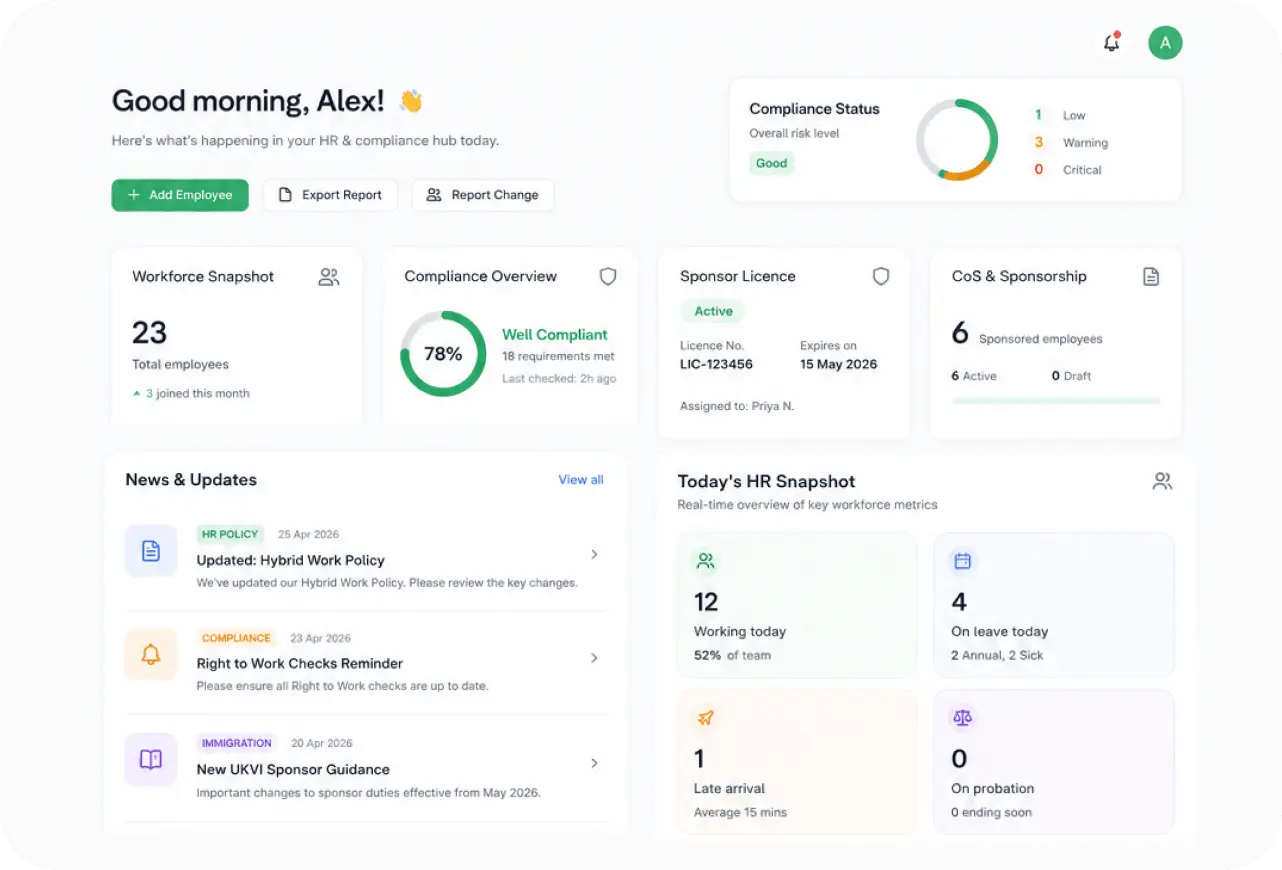
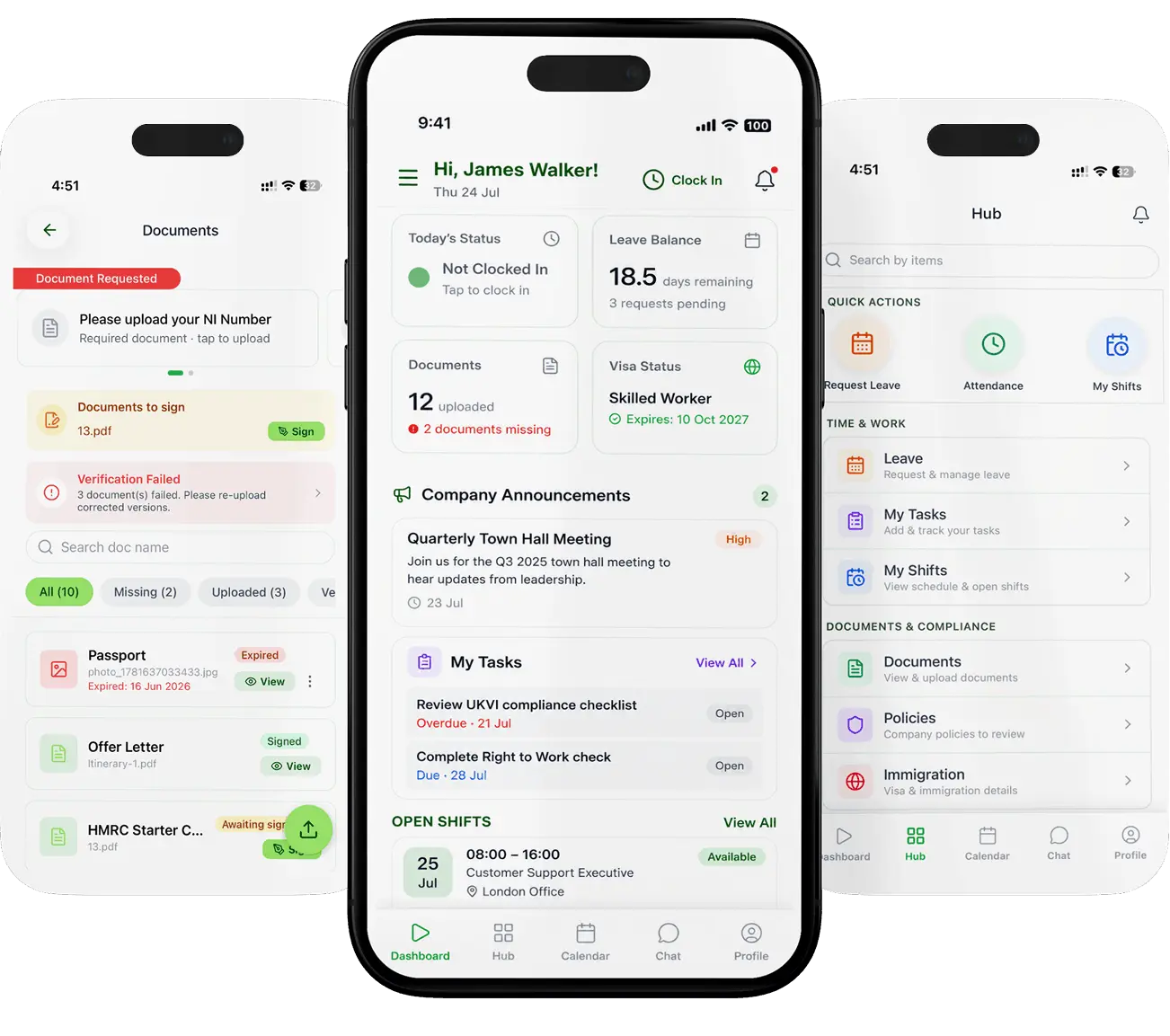
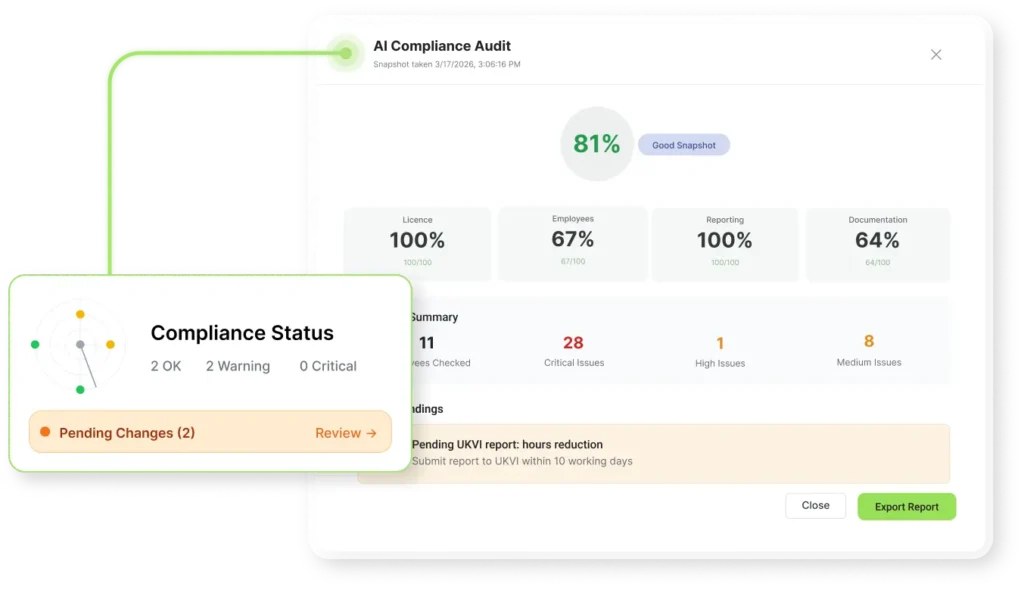
This is the work the compliance agent and the HR agent do in roothr.ai: they find who is missing what and prepare the chase. Deciding what your policy says, and what a reasonable step is for your business, stays with you and your advisers.
Hire the agent for this
- Compliance agentHire
Checks pay, hours, holiday, contracts and training against the rules, and keeps the evidence.
- HR agentHire
Keeps every employee record, contract, probation and policy up to date, and chases what is missing.
Run your own month on roothr.ai
HR, payroll, UKVI compliance and hiring in one application. Plans from £39.99 a month.